

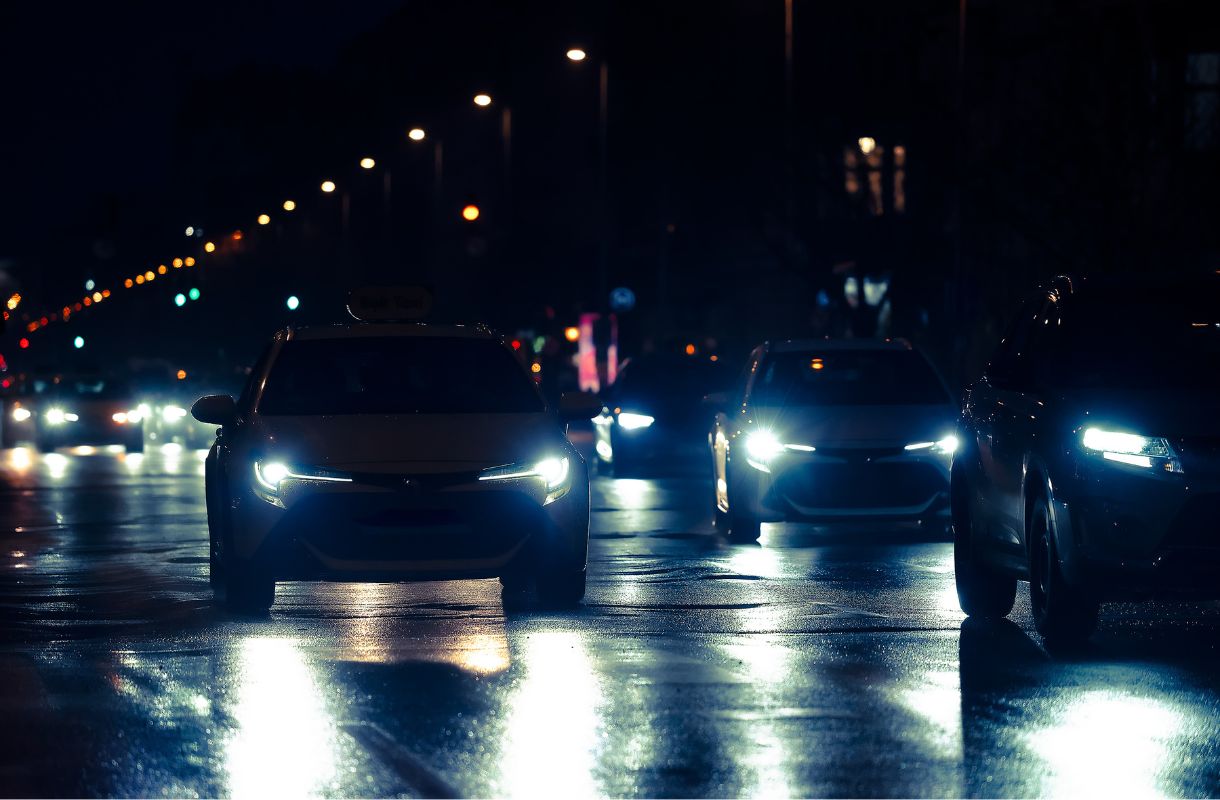
A fifth (21%) of drivers affected by headlight glare say they plan to drive less once the clocks go back as a direct result of being dazzled, according to new RAC research. A further 3% plan to stop driving at night altogether.
The RAC surveyed 1,208 regular UK drivers in October 2026. As many as 83% said they are concerned about the impact glare will have on their driving as darkness falls in late afternoon, while 76% of those affected by glare think the problem is getting progressively worse.
Among drivers who get dazzled, 50% say overly bright headlights make it harder to spot other road hazards and 49% struggle to see road signs and markings. Nearly half (47%) find it difficult to judge the position of oncoming vehicles, 43% can’t easily judge other vehicles’ speed and distance, and 35% say they get temporarily blinded. One in seven (14%) say they have narrowly avoided a collision.
Nearly two in three (63%) say they find it difficult to see the flashing amber indicators of some oncoming vehicles because their headlights are so bright.
Of those who have already given up driving at night or are doing so less, 28% say they see friends less, 20% see family less and 21% report feeling much more isolated. Some 6% have cancelled medical appointments because of the difficulties of driving in the dark, and the same proportion have postponed them.
A year ago, an independent study commissioned by the UK Government confirmed that some brighter modern headlights are more likely to cause glare to drivers. Further UK research is expected to get underway shortly after a commitment made in January’s Road Safety Strategy. Of the drivers surveyed, 73% think future research should examine both existing and future vehicles.
RAC senior policy officer Rod Dennis said: “Our latest figures uncover an uncomfortable irony: the very headlights that illuminate the road for drivers and keep them safe could be doing the polar opposite for others by temporarily blinding them. This is leading to people feeling less confident and safe behind the wheel, and in some cases is stopping them driving in the dark altogether. The impact of this on their lives shouldn’t be underestimated.”
Dr Paramdeep Bilkhu, clinical advisor at The College of Optometrists, said: “If someone is experiencing new or worsening problems with glare, it’s important to speak to an optometrist, who can check your vision and eye health and advise on possible causes.”
The RAC and The College of Optometrists recommend that drivers faced with bright oncoming headlights keep their eyes open and briefly look towards the kerb or side of the road until they can see clearly again. If dazzled, drivers should slow down safely and, if necessary, stop somewhere safe and legal until their vision improves.
