

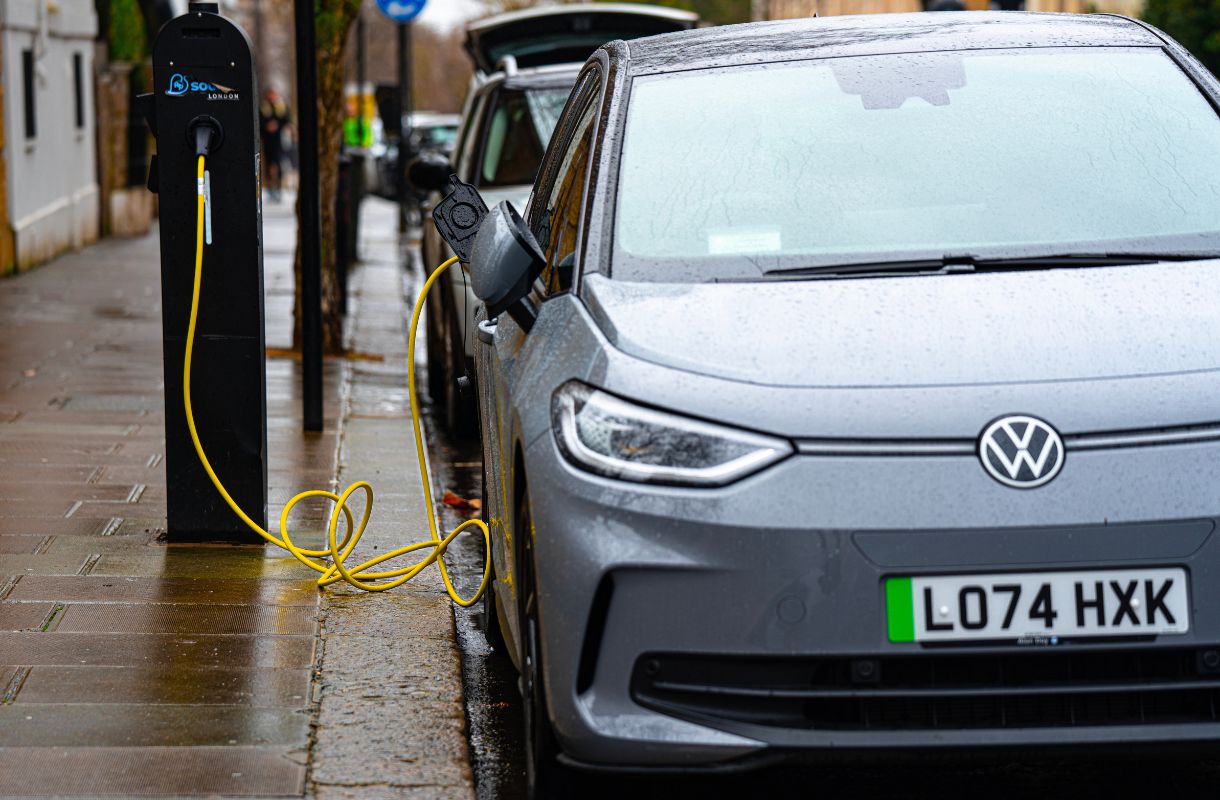
Drivers without a driveway no longer need planning permission to install cross-pavement electric vehicle chargers, a change the government says will save them up to £300 on installation.
The change applies from 21 October 2026. Cross-pavement chargers run under the pavement from a home to the car parked outside, and the Department for Transport said the change opens up home charging for as little as 2p per mile.
Changes to permitted development rights also mean it will be quicker and cheaper for charge point operators to install larger, higher-powered public EV charging hubs.
The announcement comes after September 2026 saw another record month for UK electric car sales, up 36% in a year, with nearly 100,000 electric cars sold in a single month. The government said its Electric Car Grant has now helped over 190,000 drivers save up to £3,750 off a new electric vehicle.
Buses and Local Transport Minister Simon Lightwood said: “We’re saving drivers up to £300 off the cost of installing home charging by cutting unnecessary red tape.”
Cross-pavement charging means residents without off-street parking can plug into cheaper domestic electricity prices, helping them access savings of up to £1,750 on running costs.
Vicky Edmonds, CEO of EVA England, said: “This might look like a small planning change, but for someone without a driveway, it could make the difference between being able to afford an electric car and ruling one out altogether.”
She added: “Our research found that 60% of petrol and diesel drivers without off-street parking would never consider an EV. Being able to connect a car parked on the street to cheaper home electricity could help change that. It’s now up to local authorities and landlords to make these solutions easier to access in practice.”
The government has also launched two consultations, which close on 16 December 2026. One would give tenants and leaseholders a clearer, quicker and more consistent route to installing a charge point, with guidance for landlords on how to handle the process. The government is also considering mandatory requirements for landlords and freeholders to make it harder to refuse renters’ applications.
The second looks at updating building regulations so that charge points are installed in new and refurbished covered car parks.
